
The Case For and Against Rob Brzezinski

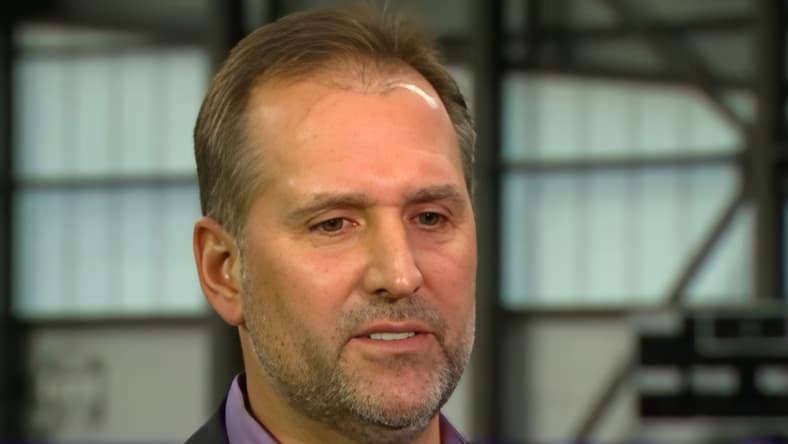
Rob Brzezinski’s time as the Vikings’ interim GM will soon come to a close, and the Vikings will decide whether to remove the “interim” label and make him a full-time GM or hire an outside candidate. Has Brzezinski earned a shot at the full-time gig?
For those of us who aren’t employed by the Vikings’ front office, this question is difficult to answer because Brzezinski has spent the vast majority of his tenure with the team outside the spotlight. For 25 years, across multiple regimes, Brzezinski has been the guy behind the scenes, handling player contracts and ensuring that the team stays under the salary cap.
It’s a testament to Brzezinski’s skill at this role that multiple GM’s have elected to keep him rather than bringing in one of their own people. Yet at the same time, the role of a GM goes far beyond structuring contracts. If we want to project his ability to lead the next era of Vikings football, the best place to look is his work at the helm of the past few months.
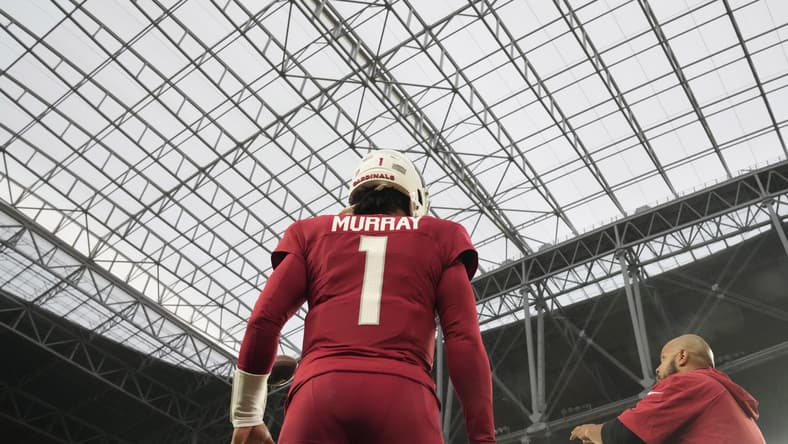
When it comes to free agency, the Vikings have been relatively quiet apart from the signing of Kyler Murray. It would have been nice to see the front office address some of the holes in their secondary and on their offensive line—having Jay Ward and Blake Brandel as projected starters doesn’t inspire a lot of confidence—but the signings they have made have been extremely efficient and cost-effective.
Bringing Kyler Murray at the veteran minimum is a huge steal, even if his play has declined in recent years. Likewise, $8 million plus incentives is a great price for former 49ers WR Jauan Jennings, who fills a gaping hole for the Vikings at WR3.
It’s far too early to tell how Brzezinski’s 2026 draft class will fare, but I think it’s fair to call it a mixed bag. In my last article, I argued that the Vikings should have gotten more value out of their first-round draft pick than injury-prone DL Caleb Banks, whether by trading down or by selecting a different player. That said, the consensus view of the remainder of the Vikings’ draft seems to be rather positive, with LB Jake Golday and DT Domonique Orange set to make immediate impacts.
The greatest weakness of Brzezinski’s tenure, in my opinion, has been the trades. It’s rarely a good idea to trade your best defensive player, yet Brzezinski not only traded Pro Bowl EDGE Jonathan Greenard to the conference rival Eagles, he did it for the equivalent of just a late 2nd/early 3rd-round draft pick. The usual excuses (locker room issues, age, finances) are insufficient here: the 28-year-old Greenard was a team captain, and the guaranteed money in the contract he signed with the Eagles amounts to only a very minor (and well-deserved) pay raise over the next two seasons.
Indeed, had they signed him to the same contract, the Vikings could have actually lowered Greenard’s cap hit for 2026 and spread out his payments into more favorable cap environments in 2027 and beyond.
Beyond this, there has also been credible reporting that the Vikings’ 2025 trade for WR Adam Thielen was pushed through by Rob Brzezinski against the wishes of then-GM Kwesi Adolfo-Mensah. The reacquisition of local legend Thielen was a fun walk down memory lane for Vikings fans, but by any objective metric, the trade proved to be an abject failure for the Vikings, and Thielen made no significant contribution to the team.
In the end, the sample size is simply too small to rule definitively one way or the other on Brzezinski’s capability to lead the Vikings. Nonetheless, the firing of Kwesi suggests that the Vikings are looking for something new, and it’s hard to see how that can be achieved by an internal hire.
Brzezinski has done fine in his limited time at the helm, but he hasn’t distinguished himself as a can’t-miss GM prospect. If it were up to me, I would try to hire externally for the GM position and (perhaps unrealistically) try to bring Brzezinski back in his former role with the team. What the ownership will do, however, is anyone’s guess.