
Drafting Non-premium Positions Is Easier Said than Done

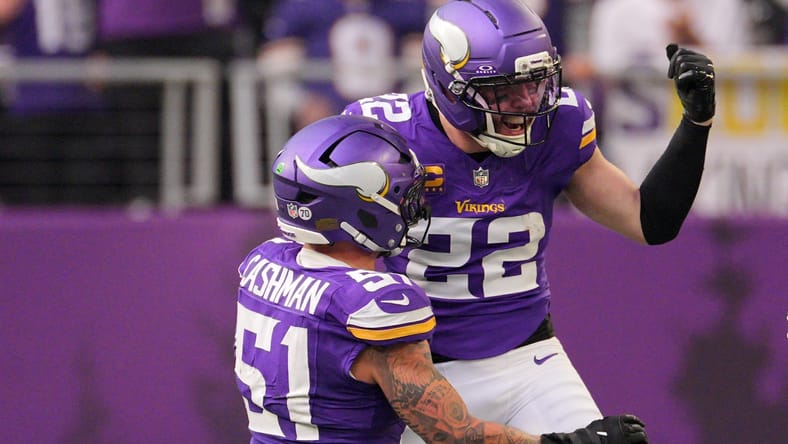
Among the Vikings’ greatest needs this offseason are a safety, a running back, and a linebacker. Future Ring of Honor S Harrison Smith and RB1 Aaron Jones are growing long in the tooth, and LB Ivan Pace has been benched for aging veteran Eric Wilson. The Vikings could use an injection of youth at all three positions, and they have enough draft picks to address all three needs, at least in principle.
The positions of safety, running back, and off-ball linebacker are all non-premium positions, and one can often find talented players at these positions in the later rounds of the draft. Recent close-to-home examples include S Cam Bynum (4th round), S Josh Metellus (6th round), LB Blake Cashman (5th round), and RB Aaron Jones (5th round).
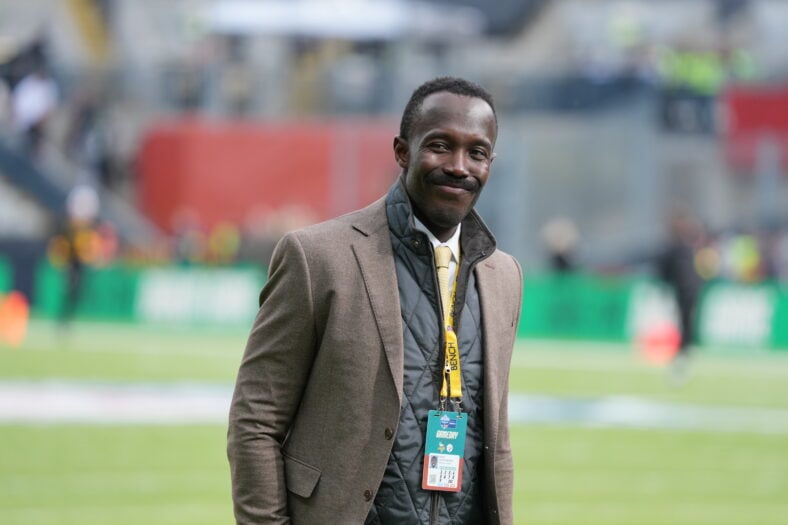
Vikings fans are tired of mediocre picks from GM Kwesi Adofo-Mensah, and I’ve even heard one proclaim that a failure to fill the aforementioned holes should be a fireable offense for the former Wall Street trader.
Unfortunately, that’s easier said than done.
It is true that the draft value curves of safeties, linebackers, and running backs are flatter than they are at positions like EDGE and OT: you’re better off looking for a starting running back in round six than you are looking for a starting edge rusher.

But the flatness of the draft value curve is a double-edged sword: it’s easier to find talented players late at these non-premium positions, but it’s also harder to find talented players earlier in the draft because these positions are simply more difficult to predict. An EDGE selected in the first round is, with fairly high probability, going to pan out in the NFL. A first-round safety could go either way (cf. recent Vikings draft bust S Lewis Cine).
If the Vikings really want to find replacements for Smith, Jones, and Wilson/Pace in the draft, they could improve their odds by double-dipping at the relevant positions, drafting multiple players at the same positions.
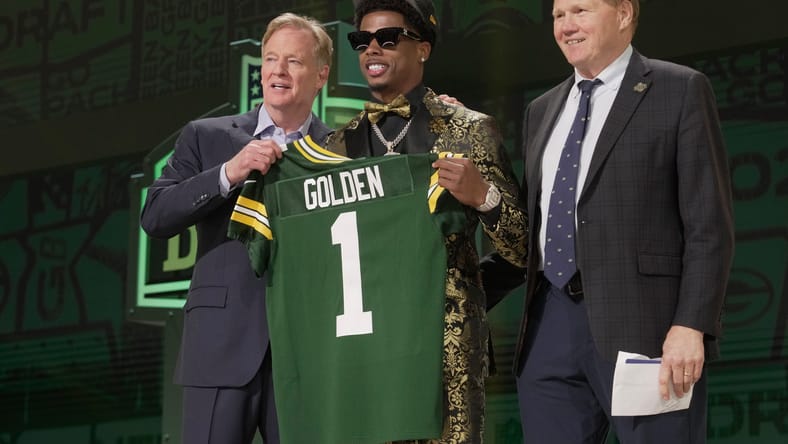
This strategy is commonly employed by the rival Packers, who recently selected WRs in the first and third rounds of the 2025 NFL Draft. But at the same time, that strategy comes with an opportunity cost: the Vikings could use depth at many positions, not just S, RB, and LB.
Kwesi does need to improve his draft performance, but it’s unrealistic to demand that he draft stars at all of our positions of need this coming April. Almost certainly, Kwesi will look to free agency to address some of the roster holes (even with limited cap space), but at the end of the day, there’s no guarantee that the Vikings will roll into 2026 without some major voids left by departed veterans.